What Is a PBN in SEO? How It Works and Why It Matters
Quick Answer
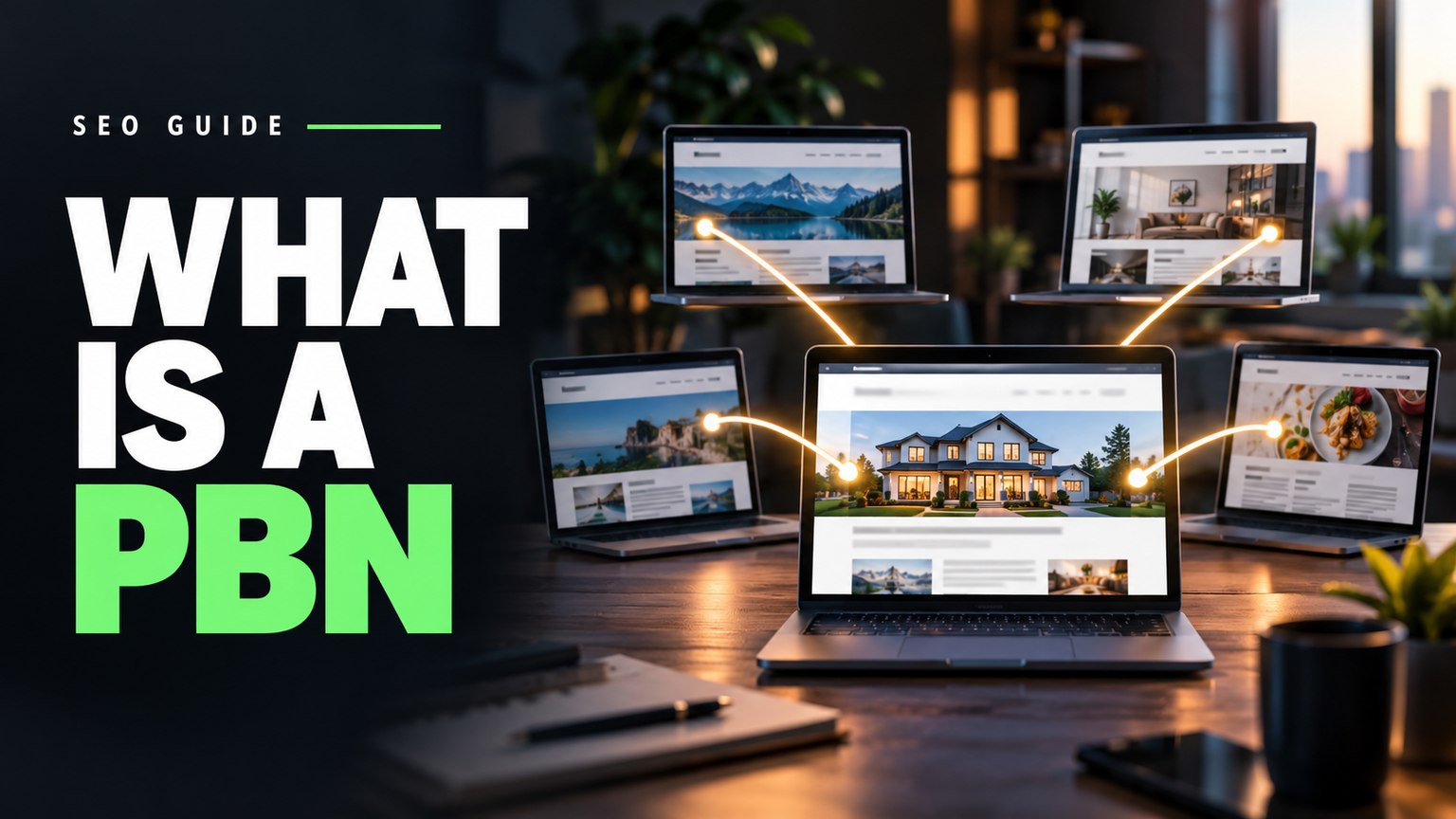
A PBN, or private blog network, is a group of websites used mainly to create backlinks that influence another site's search rankings. PBNs try to make controlled links look like independent recommendations. Google treats links made mainly to manipulate rankings as spam. Owning several websites alone does not break Google's rules.
Key Takeaways
Private blog networks can seem like a fast way to build links. Yet their value depends on more than the links they create. These seven findings explain the main choices and risks.
- A private blog network uses several controlled websites to send backlinks toward one or more target websites.
- PBN links aim to influence search rankings by creating signals that may look like independent editorial recommendations.
- Google's spam policies prohibit links made primarily to manipulate rankings, but common ownership alone does not prove spam.
- Buying an expired domain is not automatically abusive, although using it mainly to manipulate rankings can violate Google's rules.
- A crawled or indexed PBN page does not prove its outgoing backlinks help another website rank.
- Paid sponsorship links should use suitable attributes, such as sponsored or nofollow, rather than promise ranking credit.
- Original research, useful content, genuine industry relationships, and earned editorial links offer alternatives that do not depend on artificial ranking signals.
For most U.S. businesses, the safer long-term choice is to invest in real audience value. A backlink should support a useful business goal, not replace one.
What Does PBN Mean in SEO?
PBN stands for private blog network. It describes a group of websites controlled mainly to build backlinks to another website. A backlink is a link from one website to another. Search engines may use links as one of many signals when assessing web pages.
The Ahrefs explanation of private blog networks describes how these networks aim to improve the search visibility of a target website. That target is sometimes called the money site because it often sells goods or services.
Imagine a roofing company that wants more search traffic. Instead of waiting for independent websites to mention its work, the company controls several other sites. Those sites publish articles that link to the roofing company's pages. The aim is to make the target appear to have more outside support.
This is an example of the PBN model, not a claim about any real roofing company. The important detail is why the sites and links exist.
A real industry publisher may also link to a roofing company. The difference is that an independent editor chooses links for readers. A PBN operator can direct links across the network to serve a ranking goal.
The Search Engine Land guide to PBNs provides more background on this approach and its search risks. Industry descriptions help explain the term. Google's own rules determine how ranking-focused link practices are treated in Google Search.
Is every group of websites a PBN?
No. A company may own several useful websites for sound business reasons. A publisher might run separate sites about sports, travel, and technology. Each could serve its own readers and make independent editorial choices.
Links between those sites are not automatically spam. Shared ownership, hosting, or website design does not settle the question.
The key issue is purpose. Are the sites built to serve readers, or mainly to create artificial ranking signals?
Google does not publish a universal number of domains that makes a network abusive. A network of three sites is not automatically safe or unsafe. The same applies to a much larger group.
How a PBN Is Intended to Influence Rankings
A PBN tries to improve a target site's search visibility by creating backlinks under the network owner's control. The basic model is simple. Several supporting sites link toward a commercial website or another chosen page.
The operator may use newly registered domains or older domains. Articles on those sites contain links pointing toward the target. The intended result is more apparent support from outside websites.
A backlink may help readers find a relevant page. Search systems also analyze links and their context. But the existence of a link does not prove that Google assigns it positive ranking value.
A simple PBN example
Consider a made-up home improvement business. Its owner controls a main service website and three small publishing websites. Each supporting site posts an article linking to the main website.
The following table shows how the structure is intended to work. The example is hypothetical and does not show actual search results.
| Website | Role in the network | Intended link purpose |
|---|---|---|
| Main service website | The target website. | Receive links intended to support rankings. |
| Supporting website A | Publishes home repair content. | Link to a related target page. |
| Supporting website B | Publishes renovation content. | Link to the target from another domain. |
| Supporting website C | Publishes property care content. | Add another controlled backlink. |
From a reader's view, these may appear to be four separate websites. Yet one operator controls the linking choices. If their main purpose is ranking manipulation, the links create a policy concern.
The model does not prove that Google will credit those links. Nor does it establish how Google will respond to any specific network.
Why expired domains attract PBN operators
Some operators buy expired domains because those domains once hosted established websites. Their past links or search history may appear attractive.
Domain age alone does not guarantee search value. A past reputation cannot be assumed to carry over to unrelated new content.
Google's March 2024 spam policy update described expired-domain abuse. The concern is buying and reusing an expired domain mainly to manipulate rankings while offering little or no value to users.
Buying an old domain for a genuine new publication is a different case. A useful site with a real audience should be judged by what it now offers, not just its purchase history.
For more detail on ownership and operating work, see the private blog network setup, costs, risks, and alternatives guide. That separate topic is better suited to a full budget review.
Compare a PBN With Legitimate Publishing and Earned Links
The main difference is why the backlink exists. A PBN link is commonly placed to influence rankings. An earned editorial link is chosen by a publisher because the linked page offers something useful.
Paid sponsorships form another category. They can help a business reach readers without pretending to be independent ranking recommendations.
This comparison helps a new website owner sort four common situations. It is a practical guide, not an official Google classification tool.
| Approach | Main purpose | Who controls the link? | Reader value | Main concern |
|---|---|---|---|---|
| Ranking-focused PBN | Create artificial ranking signals. | Network operator. | May be weak or secondary. | Google's link-spam policy. |
| Independent publication | Inform or serve its own audience. | Publisher or editor. | Central to the publication. | Links must still follow applicable rules. |
| Earned editorial backlink | Refer readers to a useful outside resource. | Independent publisher. | Supports the reader's task. | A link is never guaranteed. |
| Paid sponsorship | Reach a relevant audience through advertising. | Parties agree on the placement. | Depends on the message and audience. | Paid links need suitable treatment. |
The same business can use more than one approach. For example, it may publish its own helpful blog and sponsor a trade newsletter. Those activities do not automatically form a PBN.
The stronger test concerns independence and intent. Would the publisher link to the target because readers benefit? Does the site have a real reason to exist without that link?
An earned editorial link cannot be ordered like a normal advertising placement. A publisher might review a resource and decide not to link. That freedom is part of what makes the recommendation independent.
The difference between a real publication and a link vehicle
A real publication serves a defined group of readers. Its articles answer questions, share knowledge, or report useful findings. It may earn traffic, newsletter subscribers, referrals, or revenue without depending on links to one target site.
A link vehicle has a narrower purpose. Its content may exist mainly to provide places where backlinks can be inserted. It may look like a normal blog, but its business value depends heavily on passing ranking signals.
Appearance alone cannot prove which type a website is. Small publishers may have little traffic and simple designs. Large sites may also use poor linking practices. Judge the content, link arrangements, and purpose together.
Where Google's Rules Draw the Line
Google's main concern is links created primarily to manipulate search rankings. Its official Search spam policies describe link spam and related practices.
Examples include buying or selling links for ranking purposes, excessive link exchanges, automated link creation, and low-value content made mainly to manipulate linking signals.
The rule focuses on the use of links. It does not say that every business with several domains is violating policy.
A company may build a network of sites for separate products, regions, or audiences. The concern grows when those sites exist mainly to manufacture backlink signals.
What can happen when Google finds link spam?
Google may reduce the effect of artificial links. Sites that violate its spam rules may also lose search visibility or face other enforcement actions.
Google's spam updates documentation explains its automated spam systems, including SpamBrain. Human review and manual actions can also apply in relevant cases.
Not every PBN link produces the same outcome. A link might provide no useful ranking credit. A website might lose visibility. A manual action may occur in some circumstances.
No reliable public percentage shows how often Google detects every kind of PBN. Claims that all PBNs are detected, or that any network is impossible to detect, go beyond the verified evidence.
A business should not build its SEO plan around an assumed detection rate. The policy concern exists even when a seller claims that its network is safe.
Are paid links always against Google's rules?
No. Google allows websites to use links for advertising and sponsorship when those links are handled in line with its guidance.
Google's outbound link qualification guidance recommends the sponsored attribute for advertising or paid placements. The nofollow attribute is also acceptable for paid links. The ugc attribute applies to user-generated content, such as forum posts and comments.
These attributes help describe the link relationship to Google. They do not turn a purchase of ranking credit into a sound SEO investment.
For U.S. businesses, consumer-facing advertising disclosures may also matter. That is a separate issue from Google's search rules. Exact duties depend on the arrangement and applicable law.
An Indexed PBN Link Is Not Proof of SEO Value
An indexed PBN page does not prove that its backlink improves another website's rankings. Google can discover a link without assigning it the value a seller expects.
This difference is easy to miss. A report may show that a URL was submitted, crawled, or indexed. Each status describes a different event.
Google's explanation of how Search works separates crawling, indexing, and serving results. A page must meet technical conditions for possible inclusion, but inclusion is not guaranteed.
The Google Search technical requirements describe minimum conditions such as access for Googlebot and a successful HTTP response. Meeting those conditions does not promise indexing or rankings.
What backlink status reports actually show
Use this evidence ladder when reviewing an indexing service or seller report. The stages are related, but each supports only a limited conclusion.
| Reported stage | What the evidence may establish | What it cannot prove |
|---|---|---|
| URL submitted | A URL entered a submission process. | Google crawled or indexed the page. |
| URL discovered | A system found the URL. | Google fetched or credited its links. |
| Page crawled | A crawler fetched the page. | Google added the page to its index. |
| Page indexed | The page appears in Google's index, based on reliable evidence. | Its outbound backlink passes ranking value. |
| Rankings changed | Search visibility changed during a measured period. | One backlink caused the change. |
The source of a status matters. A provider's own crawl report is not the same as proof that Googlebot fetched a page. A third-party indexing estimate is not the same as direct Google evidence.
Google also gives guidance on crawlable links. A normal HTML link with an href attribute can be crawlable. Yet technical crawlability is not proof of link quality, editorial independence, or search benefit.
A seller might show a live page with a working backlink. That proves the link exists at the time of inspection. It does not prove that the link helps the target rank.
Where an indexing tool fits
Indexing tools belong in the technical checking process. They can help site owners review URL discovery and crawl-related status. They cannot make a manipulative link compliant with Google's rules.
For example, the IndexNowFast backlink indexer describes backlink URL submission and tracking. Its stated features are service claims, not independent proof that a specific backlink gains ranking credit.
A site owner may also use a Google index checker to examine reported index presence. An index check answers a narrower question than a ranking study.
For business reporting, keep these measures separate. Record technical URL status, search visibility, referral visits, leads, and sales as different outcomes. None should be relabeled as proof of another.
Should a Small Business Use a PBN?
A small business should not make artificial PBN links the foundation of its long-term SEO plan. The potential ranking benefit is uncertain, while Google's published rules create a clear policy concern.
Small businesses also face limits on time and budget. Money spent on controlled websites cannot be spent again on better service pages, useful articles, research, outreach, or real advertising.
The decision is not only about whether a network might create links. It is about whether those links provide dependable business value without creating avoidable risk.
Three questions to ask before spending money
A basic decision framework can help. These questions do not calculate a penalty probability. They test whether the proposed work makes sense without relying on artificial ranking credit.
- Would each supporting website deserve to exist without linking to my business? Look for original content, a defined audience, and a useful purpose. A website built only to place links has a weak independent business case.
- Would the investment still make sense if Google ignored every network link? Consider referral visits, customers, advertising reach, and content value. If the answer is no, the return depends heavily on uncertain ranking effects.
- Could the same budget build something useful on my own site or earn independent attention? Compare the effort needed for publishing, research, outreach, and maintenance. Choose work that can deliver value beyond a backlink count.
These questions shift the focus from promised authority to actual business outcomes. A clear audience and useful content do not guarantee search gains. They do give the investment a purpose that can be measured without assuming artificial link credit.
Why PBN costs are hard to compare
No representative U.S. PBN cost dataset for 2026 was established in the supplied research. A single link quote cannot show the full cost of running several websites.
Ownership may involve domain purchases, renewals, hosting, content, software, security, editing, and staff time. Costs will change with the size and quality of the network.
Buying one link and operating several websites are also different services. Their prices should not be used as if they measure the same thing.
For a fair comparison, use real quotes and an actual work plan. Include recurring costs, not just the first purchase. Then compare that total with other ways to reach customers.
Better ways to earn links and traffic
A more durable approach starts with something other people find useful. Google encourages helpful, compelling content that users want to reference.
A business does not need to create a large research report to begin. It can publish a clear buyer guide, explain a difficult service choice, share useful original findings, or answer questions that customers keep asking.
Several approaches can work together. The right mix depends on audience, budget, and the results the business wants to measure.
| Approach | What it can deliver | Main work involved | Best measure |
|---|---|---|---|
| Original research | A reason for others to cite new findings. | Gather, check, and explain data. | Relevant citations and audience use. |
| Helpful service content | Clear answers for potential customers. | Research, writing, and updates. | Qualified visits and leads. |
| Editorial outreach | Attention from relevant publishers. | Find prospects and share useful resources. | Earned coverage and referrals. |
| Genuine partnerships | Access to related audiences. | Build a real shared project. | Referrals and business outcomes. |
| Qualified sponsorships | Paid reach within a chosen audience. | Review audience fit and terms. | Referral visits and conversions. |
The choice should follow the business goal. A firm with useful original data may invest in research. A local service provider may benefit more from strong service pages and local relationships. Sponsorships can suit firms seeking audience reach rather than search-ranking credit.
None of these methods guarantees links or higher rankings. Their strength is that they can serve a real purpose even when no ranking benefit follows.
For a closer look at two common placement choices, see the guest posting versus niche edits comparison. Both approaches still need review of editorial quality, payment terms, and link purpose.
What to Do if You Already Have PBN Backlinks
Start by checking the actual links and their history. Do not assume that an unfamiliar backlink means your website has a manual penalty.
A website may attract low-quality links without asking for them. A traffic drop can also have many causes. Technical errors, content changes, competition, and broader search changes should be considered before blaming one group of links.
If your business or agency arranged ranking-focused placements, examine those arrangements carefully. Review the referring pages, payment terms, link purpose, and any records of the work.
The IndexNowFast guide to PBN blog post backlinks provides a more focused discussion of backlink review and response.
A careful response process
A proportionate review should move from evidence to action. It should not start with a mass removal request or a large disavow file.
- Check Google Search Console. Look for an actual manual action and read any reported issue.
- Review the link arrangements. Check whether the links were bought, arranged, earned, or placed without your knowledge.
- Assess the evidence. Consider the sites' purpose, link context, and any pattern of deliberate manipulation.
- Seek removal or correction where warranted. If you control an improper placement, consider removing it or fixing its treatment.
- Use advanced remedies only when justified. Follow Google's published criteria before considering disavowal or a reconsideration request.
Google's disavow links guidance says most websites do not need the tool. It warns that incorrect use can harm search results. Its use is generally meant for substantial artificial or spammy links that caused, or are likely to cause, a manual action.
The distinction between investigation and action protects website owners from needless changes. An unknown backlink should prompt a review only when the evidence gives a reason for one. It should not trigger automatic deletion or disavowal.
There is no guaranteed recovery period. Removing manipulative links cannot be assumed to restore any artificial ranking benefit that Google has already removed.
Common Questions About PBNs
These answers cover common points that confuse website owners. Some deal with Google's rules. Others explain why a link report cannot prove search value. They also help readers judge sales claims without assuming that every suspicious website belongs to a PBN.
The questions focus on basic definitions, domain ownership, expired domains, backlink value, and safe responses. Use the answers as a starting point, then check the evidence behind any specific link arrangement before making a business decision.
1. What does PBN stand for in SEO?
PBN means private blog network. It refers to a group of controlled websites used mainly to build backlinks toward one or more target sites. The intended goal is often to influence search rankings.
2. Are PBNs against Google's rules?
Links created mainly to manipulate rankings can violate Google's link-spam policies. Owning multiple websites is not automatically a violation. The purpose of the sites and their linking behavior matter.
3. Can PBN backlinks improve Google rankings?
PBN operators seek ranking benefits, but a given backlink has no guaranteed effect. Google may ignore artificial links or take other action against spam. The supplied research does not establish a reliable average ranking gain from PBN links.
4. Is buying an expired domain the same as building a PBN?
No. An expired domain can be reused for a legitimate publication. The concern is repurposing it mainly to manipulate rankings while offering little or no value to readers.
5. How can I tell whether a site belongs to a PBN?
Review the site's purpose, content, editorial independence, link patterns, and known business arrangements. No single sign proves membership. Shared hosting, similar designs, or low traffic may also appear on legitimate websites.
A third-party authority score cannot establish Google's treatment of the site. The guide to reviewing suspicious backlinks and authority metrics explores this limitation in more detail.
6. Does indexing a PBN backlink make it valuable?
No. Indexing shows that a source page has been included in Google's index, when the status is reliably established. It does not prove the outbound link passes ranking credit or causes any change in the target site's position.
7. Should I disavow every PBN link pointing to my website?
No. Google's guidance limits use of the disavow tool to specific circumstances. Review the links, check for a manual action, and assess whether the documented conditions apply. Blanket disavowal can do harm.
8. Is a PBN cheaper than earning backlinks?
There is no sound universal price comparison in the verified research. A PBN may need domain fees, hosting, content, updates, and management. Earned-link work also costs time and money. Compare full costs and business outcomes rather than one link price.
The Main Rule to Remember
A PBN is defined by its ranking-focused linking purpose, not just by the fact that several sites share an owner. That distinction helps explain why legitimate publishing and manipulative link networks should not be treated as the same thing.
Google's rules create real risks for artificial backlinks. A live link, a high authority score, or an indexed page does not remove those risks. None alone proves a ranking gain.
For a business choosing where to invest, start with the audience. Build resources people need, earn independent mentions, and measure real outcomes. Treat backlink reports as evidence of specific technical events, not as proof of lasting SEO success.
Editorial publication note: The article-body depth issue has been repaired. Approval for a separate URL remains on hold. The verified site research found related PBN pages, and the supplied peer evidence shows overlapping reader needs. Review the current canonical pages and Google Search Console query data before deciding whether to publish a new beginner article or improve an existing page. No live performance comparison or consolidation approval was supplied.